
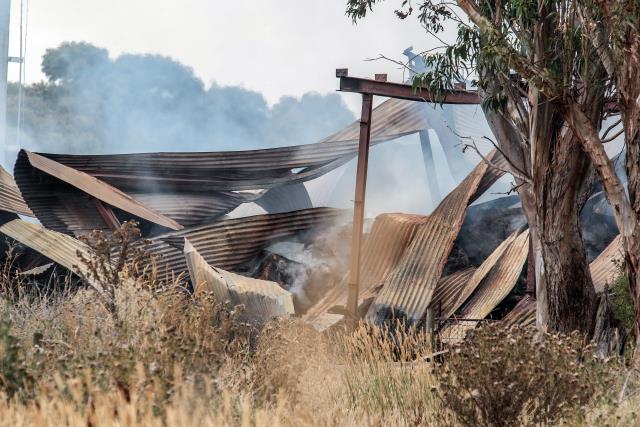
Spontaneous combustion in hay occurs when internal heat builds up to the point of ignition as a result of microbial activity and chemical reactions. Unlike fires caused by lightning or machinery, spontaneous combustion is insidious: it starts deep within a haystack and can smoulder unnoticed until it erupts into flames.
How do spontaneous combustions happen?
Hay is an organic material rich in sugars, proteins, and moisture – ideal conditions for microbial growth. When hay is baled too wet or stored before it has fully cured, bacteria and fungi begin to break down the plant matter. This microbial activity then generates heat.
What are the risk factors?
• High moisture content: hay baled with more than 20% moisture is at risk. Mould growth and fermentation occurs when moisture levels are between 20-35%
• Dense packing: tightly packed bales trap heat and moisture, accelerating microbial activity
• Poor ventilation: lack of airflow prevents heat from dispersing
• Environmental conditions: warm, humid weather
• Storage practices: storing hay in enclosed barns or sheds without monitoring
What to look out for:
Early detection is crucial. Farmers should regularly inspect haystacks for signs of heating:
• Steam rising from the stack
• Musty, caramel, or tobacco-like odours
• Mould growth on or inside bales
• Condensation or corrosion under roofing
• Slumping or deformation of the stack.
Using a temperature probe or inserting a metal rod (like a crowbar) into the stack can be used to detect internal heat. If the rod feels hot to the touch after removal, the hay may be dangerously warm, and action should be taken.
How to prevent heating hay:
• Curing hay thoroughly
Allow hay to dry completely before baling and monitor moisture levels using a moisture meter. Ideal moisture content for small square bales is 18–20%, large square bales: 12–15% and round bales: 15–18%. When making sure hay is cured properly, also test plant nodes and leaf sheaths for hidden moisture.
• Monitor temperatures
Use temperature probes or wireless sensors to track internal bale temperatures. If temperatures exceed 55°C, monitor closely. At 71°C, consider separating bales and increasing ventilation.
• Improve ventilation
Store hay in well-ventilated areas. Avoid stacking bales too tightly.
• Separate risky bales
Store damp or suspect bales separately. Monitor them more frequently and avoid placing them near dry hay.
• Limit stack size
Smaller stacks reduce heat accumulation. Leave space between stacks and walls for air circulation.
• Protect from moisture
Ensure roofs, spouts, and drainage systems prevent water from reaching hay. Cover stacks with breathable tarps if stored outdoors.
• Use technology
Modern sensor systems can provide real-time data on hay temperature and humidity, helping farmers make informed decisions and prevent fires before they start.
What to do if you find heating hay:
• Pull apart the stack to release heat and moisture
• Move bales outdoors if possible
• Call 000 if smoke or fire is visible
• Keep fire suppression tools (hoses, extinguishers) nearby. Never attempt to extinguish a hay fire alone. Fires can reignite and spread rapidly.
Spontaneous combustion in hay is preventable. By understanding the biological and chemical processes involved, farmers can take proactive steps to protect their property and livestock. Proper curing, monitoring, and storage practices are the keys to safe hay management.
Find more information about drought support at www.agriculture.vic.gov.au/drought or call 136 186.